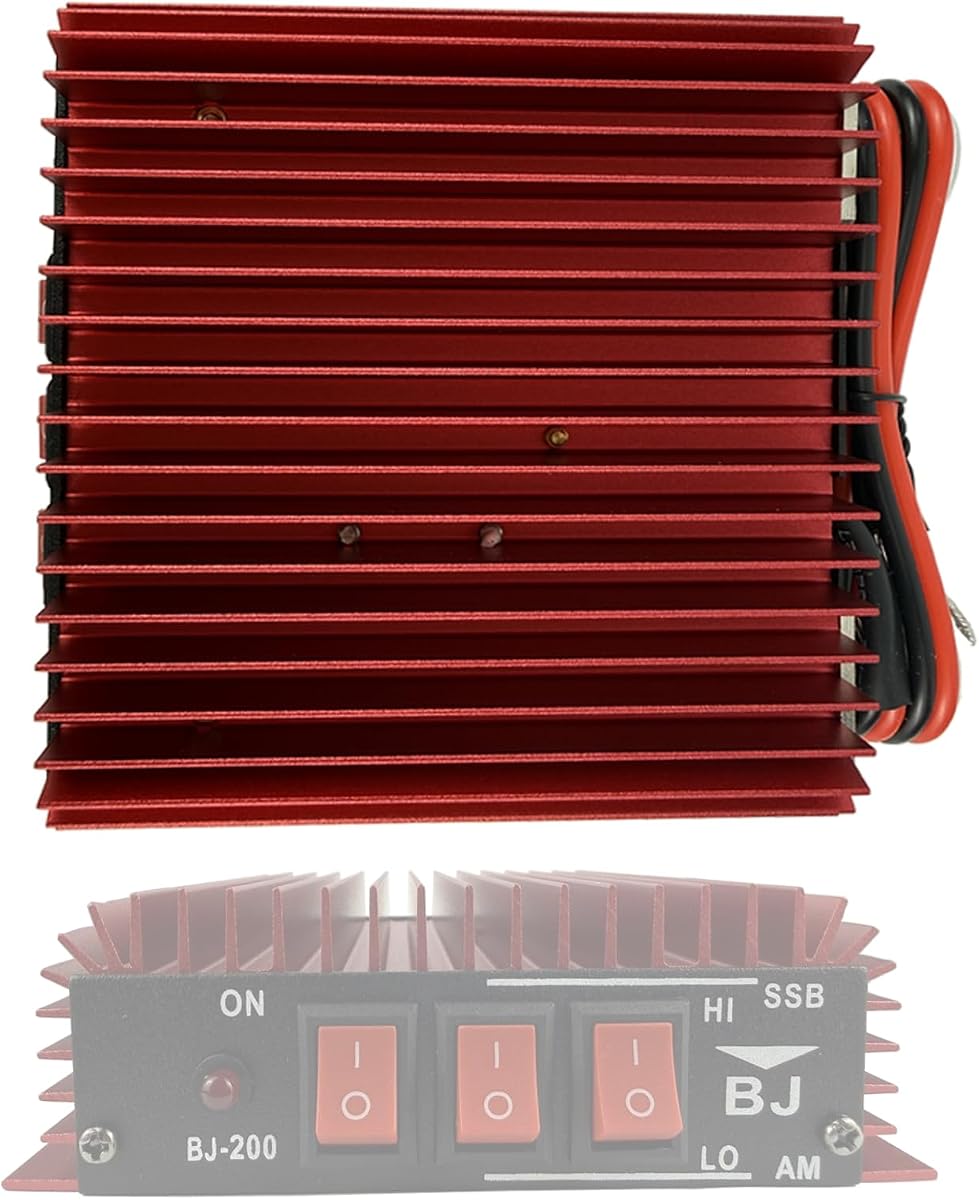
BJ-200 Linear Power AMP, 3-30MHz Radio AMP 50W FM 100W AM 150W SSB for 3-5W Input 2-Way Radio Transceiver, 13.8V
5.0Editor score
150W SSB output max
Compact aluminum heat sink
Polarity reversal protection
Simple HI/LO control
This guide compares the top ten linear amplifiers for ham radio including power output, band support, cooling features, and compatibility with HF transceivers
Choosing the right linear amplifier for ham radio is crucial for extending your communication range and improving signal clarity. Whether you operate QRP setups or need more power for contesting, a quality amplifier ensures stable and efficient transmission across HF bands.
We evaluated ten leading models based on power output, thermal management, protection features, and compatibility with popular transceivers. Our analysis focuses on real-world performance, durability, and ease of integration for both base and portable stations.
Each pick highlights key strengths, trade-offs, and ideal use cases to help you find the best fit for your station. Keep in mind that availability and specs may change over time, so verify details before purchasing your next amplifier.
5.0Editor score

4.2Editor score

3.9Editor score
The following table provides a side-by-side comparison of all ten selected linear amplifiers. Review key specifications such as output power, supported modes, input requirements, and protection features to identify the model that best matches your operational needs.


The Xiegu GPA100 stands out as a robust linear amplifier designed to boost QRP transceivers to 100W output. It delivers clean and stable RF performance across multiple HF bands with intelligent protection systems.
We may earn a commission when you buy through this link, at no additional cost to you.
Its standout feature is flexible band switching that can be manual or automatic. The built-in Bluetooth support enables cable-free control when paired with compatible radios like the IC-705 for seamless operation.
Operators may find it less versatile for non-Xiegu setups since auto sync depends on specific handshake protocols. The power output is also fixed to 100W so users needing higher gain should look elsewhere.
This unit is ideal for ham operators who want a reliable upgrade to their QRP station without complex wiring. If you value signal purity and smart features this is a strong choice for your shack.
Bluetooth connectivity allows automatic band switching without extra cables when used with supported transceivers for a cleaner station setup.
Advanced sensors monitor SWR overheating and overcurrent conditions to switch into safe modes and extend the amplifier lifespan during heavy use.
We may earn a commission when you buy through this link, at no additional cost to you.
The BJ-300 Plus is a broadband linear amplifier offering up to 150W output on SSB modes. It supports AM FM and CW making it suitable for diverse communication styles in ham and CB radio applications.
We may earn a commission when you buy through this link, at no additional cost to you.
A high-efficiency cooling fan and large heat sink help maintain stability during extended transmissions. Safety features include polarity reversal protection and dual fuses to guard against electrical mishaps.
User feedback suggests build quality may vary and the rating reflects some reliability concerns. The controls are straightforward but lack advanced features like auto band tracking found in higher-end units.
This model works well for operators seeking extra power without investing in complex systems. If you need basic amplification for HF or CB with simple setup this is a practical option.
Support for AM FM SSB and CW ensures compatibility with different voice and data transmission methods across various radio platforms.
Active cooling and polarity protection help prevent overheating and connection errors that could damage internal components or linked transceivers.
We may earn a commission when you buy through this link, at no additional cost to you.
This unit mirrors the BJ-300 Plus model with similar performance specs and protections. It delivers strong output across modulation types and uses active cooling to sustain operation during long sessions.
We may earn a commission when you buy through this link, at no additional cost to you.
The design prioritizes user-friendly controls and protection mechanisms. Polarity reversal protection and fuses help prevent damage from incorrect power setup which is common in field operations.
While capable the average rating suggests some users may encounter inconsistencies. It lacks advanced integration features and may require manual adjustments for optimal performance across bands.
Ideal for hobbyists needing a budget-friendly power boost for HF or CB. If you prefer simple hardware over complex electronics this amplifier meets basic amplification needs effectively.
Supports multiple radio types including CB and ham HF with straightforward input requirements and standard connectors for quick setup.
Integrated fan and aluminum heat sink work together to dissipate heat quickly keeping internal components stable during heavy transmit duty cycles.
We may earn a commission when you buy through this link, at no additional cost to you.
The BJ-300 is designed for HF transceivers needing a modest input to reach higher output levels. It supports AM FM SSB and CW with overvoltage protection to enhance operational safety.
We may earn a commission when you buy through this link, at no additional cost to you.
Dual power control switches let users adjust output strength for different needs. The compact aluminum heat sink ensures efficient cooling without taking up much space in a station.
Lack of user ratings makes reliability assessment difficult. Advanced features like automatic tuning or wireless control are absent which may limit appeal for tech-oriented operators.
This option suits those seeking straightforward amplification for HF. If you need a dependable unit with essential protections and simple controls this model serves that purpose well.
HI/LO switches allow operators to select appropriate output levels for specific contacts or conditions without needing complex settings.
Built-in electronic switches protect against incorrect power connections which helps prevent damage to both the amplifier and connected equipment.
We may earn a commission when you buy through this link, at no additional cost to you.
The BJ-200 earns top marks for reliability and performance at a budget-friendly point. It delivers up to 150W on SSB and covers the 3-30MHz range for versatile ham radio use.
We may earn a commission when you buy through this link, at no additional cost to you.
Its red aluminum heat sink and polarity reversal protection ensure stable and safe operation. Clear controls and LED indicators make setup easy for both new and experienced users.
Though controls are simple they lack automation features. Users must manually set modes and power levels which can slow workflow during rapid frequency changes or contests.
This amplifier is perfect for operators prioritizing value and dependability. If you want strong HF output without complicated electronics this model provides excellent bang for the buck.
A perfect user rating suggests consistent performance and customer satisfaction across different applications and installation environments.
The aluminum heat sink design helps maintain safe operating temperatures during continuous transmission to prevent performance degradation.
We may earn a commission when you buy through this link, at no additional cost to you.
The Xiegu XPA125B combines power amplification with an automatic antenna tuner for streamlined operation. It outputs up to 125W and offers clear LCD feedback on voltage current and SWR.
We may earn a commission when you buy through this link, at no additional cost to you.
Safety circuits detect abnormal conditions like high SWR and switch to bypass mode to protect the transceiver. Its smaller design compared to prior versions makes it easier to mount in tight spaces.
Feedback indicates occasional tuner inconsistency which may frustrate operators who need perfect matches every time. The price reflects its premium features but budget buyers might prefer simpler units.
This is ideal for operators wanting an all-in-one HF boost with tuning convenience. If you value integrated features and modern displays this amplifier delivers advanced capability for your station.
Built-in tuner removes need for external tuner and simplifies setup especially useful for portable operations or compact stations.
Large backlit LCD displays critical operational data at a glance helping users monitor performance and react to issues quickly.
We may earn a commission when you buy through this link, at no additional cost to you.
This module provides 30W linear amplification optimized for CW and SSB modes across the shortwave spectrum. It is designed as a finished board for straightforward integration into custom ham setups.
We may earn a commission when you buy through this link, at no additional cost to you.
The broadband circuitry delivers consistent gain without manual tuning which suits field day or portable operations. Thermal management includes a heat sink to prevent overheating during extended use.
Power output is limited to 30W so it serves low-power boosters better than high-power stations. Integration requires basic soldering or connection skills which may deter novice users.
Best for kit builders or portable operators seeking small signal boost. If you need a simple HF module to enhance QRP transmissions this board offers reliable performance in a compact package.
Small board form factor makes it easy to embed in mobile or portable transceiver projects without significant space demands.
Linear design ensures minimal distortion on CW and SSB which preserves voice clarity and code readability during long contacts.
We may earn a commission when you buy through this link, at no additional cost to you.
This amplifier is tailored for CB radio use with a 12-14V DC input compatible with vehicle power systems. It uses a simple three-wire connection to simplify installation in mobile setups.
We may earn a commission when you buy through this link, at no additional cost to you.
SO-239 connectors allow quick antenna and transceiver connections without adapters. The design ensures stable operation during engine starts and typical driving conditions.
Features are minimal with no extra controls or protections listed. It is not intended for HF amateur bands beyond basic CB frequency alignment which limits versatility.
Ideal for CB enthusiasts needing a straightforward power boost. If you want plug-and-play amplification for CB mobile comms this unit provides essential function without complexity.
Standard automotive voltage input ensures reliable performance in mobile environments where power fluctuates during engine cycles.
Standard connectors reduce installation time and tools required for basic amplification in temporary or permanent CB stations.
We may earn a commission when you buy through this link, at no additional cost to you.
This low noise amplifier boosts weak signals across a broad range from shortwave to UHF making it useful for SDR and ham radio receivers. It offers 32dB gain with minimal noise figure.
We may earn a commission when you buy through this link, at no additional cost to you.
Battery-friendly power needs allow portable deployment for field operations. The 50 ohm impedance matches standard RF systems for seamless integration with existing antenna setups.
Unlike transmit amplifiers it does not boost outgoing signals which limits its role to reception enhancement. It serves best as a preamp rather than a power amplifier.
Perfect for operators improving receive sensitivity without adding noise. If your goal is clearer incoming audio or better spectrum viewing this module provides essential gain and low noise performance.
Low noise figure ensures weak signals are amplified without adding significant background noise for improved reception quality.
Efficient current draw enables battery operation for field use or emergency stations where power sources are limited.
We may earn a commission when you buy through this link, at no additional cost to you.
This amplifier is designed to pair seamlessly with Xiegu transceivers for streamlined control and automatic tuning. It delivers 100W output and includes premium materials for durability and reliability.
We may earn a commission when you buy through this link, at no additional cost to you.
Support for future models means longer term compatibility as you upgrade your station. Maintenance and support are backed by specialized technicians for peace of mind during heavy use.
Limited to Xiegu hosts so users with other brands will not benefit from auto features. The investment reflects the tailored integration and quality construction provided by the manufacturer.
Best for existing Xiegu users seeking integrated power boost. If you value system coherence and reliable support this amplifier enhances your station with proven performance and modern features.
Optimized compatibility with Xiegu radios ensures reliable communication and automatic tuning without manual intervention.
Access to specialized technicians helps resolve issues quickly and ensures smooth operation over the long term for your station.
We may earn a commission when you buy through this link, at no additional cost to you.
Selecting the right linear amplifier requires balancing power needs, thermal safety, and compatibility with your existing transceiver. These factors ensure stable performance and long-term reliability.
Evaluate how much output power you need across AM FM SSB and CW modes. Higher wattage extends range but must match your legal limits and station requirements.
Choose an amp that supports all modulation types you use regularly to avoid signal distortion or power drops in specific bands.
Verify the input power range matches your transceiver output. Units requiring low input like 3-5W work well with QRP radios while others need higher drive power.
Ensure connectors and control protocols align to prevent installation headaches and ensure smooth integration into your station.
Look for cooling solutions like fans or large heat sinks that maintain stable temperatures during prolonged transmission. Overheating can damage internal components and reduce lifespan.
Active cooling is especially important for high output models to ensure consistent performance under load.
Safety circuits for overcurrent overvoltage and reverse polarity help protect both the amplifier and your transceiver from accidental damage or misuse.
Built-in bypass modes during high SWR or overheating events add another layer of reliability for uninterrupted operation.
Automatic band switching and wireless control simplify operations especially when changing frequencies often. These features reduce manual steps and improve workflow efficiency.
Manual controls are simpler and cheaper but may slow down rapid band changes needed during contests or field days.
Consider size weight and connector types if you plan to move the unit between base and portable setups. Compact designs are easier to install in tight spaces.
Standard connectors like PL-259 or SO-239 ensure compatibility with existing antenna cables without needing extra adapters.
Durable materials like aluminum heat sinks and quality circuit boards improve reliability and heat dissipation which is key for continuous operation.
Rugged construction is vital for field use or environments with vibration and temperature fluctuations to prevent mechanical failures.
Check for availability of technical support and warranty terms especially for imported or specialized models. Good support reduces downtime when issues arise.
Reputable sellers and brands often provide better after sales service and spare parts availability for long term station health.
Start by connecting the amplifier between your transceiver and antenna using high-quality coax cables. Ensure power supply matches voltage and amperage specs and secure ground connections to avoid noise.
Power on the unit and test on low power settings first. Monitor temperature and signal quality while listening for distortion. Adjust mode and power controls according to your transmit needs.
Regularly clean dust from vents and check cooling fans for smooth operation. Inspect connectors for wear and protect the amplifier from moisture to maintain reliable performance over time.
A linear amplifier boosts the RF output power of your transceiver while preserving signal integrity across different modulation modes. It is used to extend communication range and improve signal clarity without adding distortion to voice or data transmissions.
In most countries you need an amateur radio license to operate a linear amplifier legally. Ensure your license class permits the power levels you intend to use and follow local regulations to avoid interference and fines.
Keep ventilation paths clear and use external fans if the unit is enclosed. Allow cooling breaks after long transmissions and regularly clean dust from heat sinks to maintain optimal thermal performance and longevity.
Not all amplifiers work with every transceiver due to input power and control protocol differences. Always check compatibility specs and connection types before purchase to ensure proper integration with your station setup.
Look for polarity reversal protection overvoltage guards and automatic bypass modes for high SWR or overheating. These features help protect both your amplifier and transceiver from damage during unexpected electrical events.
Inspect connectors and vents monthly and clean dust every few months depending on your environment. Check fan operation and power cables periodically to ensure reliable performance and prevent electrical issues.
No they only boost transmit power not received signals. For better reception use a low noise amplifier or preamp designed specifically for improving weak signal clarity on the receive side.
Most require a stable 13.8V DC supply with sufficient amperage for peak output. Use regulated power supplies and avoid undersized sources that can cause voltage drops and unstable performance during transmit cycles.
The top picks highlight a range of options from budget-friendly boosters to premium units with integrated tuning. Each model offers unique advantages depending on your power needs and existing station setup.
Prioritize compatibility and thermal safety to ensure reliable long-term performance. Choosing an amplifier that fits your workflow will make your transmissions smoother and more effective.
Always check current product details and availability before making a purchase since specs and support can change over time.