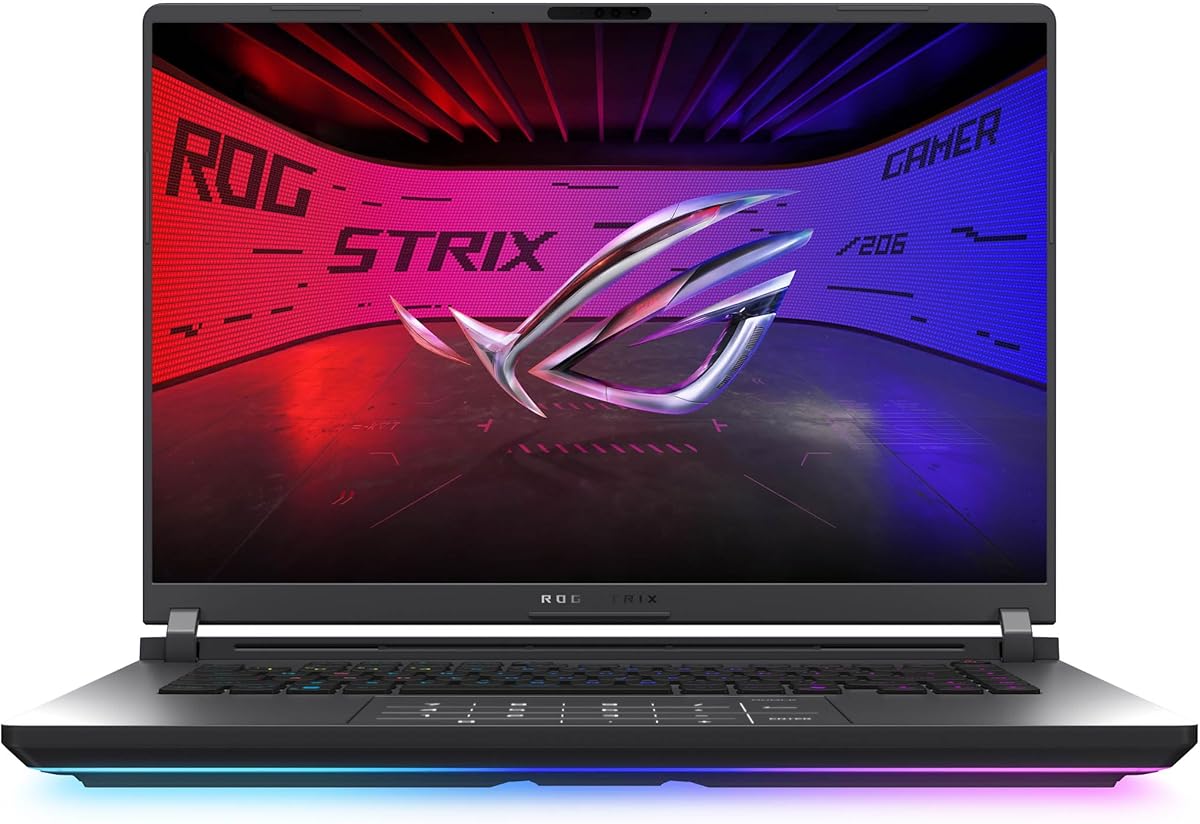
ASUS ROG Strix G16 (2025) Premium
4.3Editor score
Intel Core Ultra 9 275HX
RTX 5070 Ti graphics
240Hz 2.5K Nebula display
Flight simulators demand powerful hardware to render realistic skies and physics. Choosing the right laptop ensures smooth gameplay and detailed visuals without frustrating lag during critical maneuvers.
We analyzed performance, display quality, and cooling systems to rank these models. Each pick balances raw power with portability for enthusiasts who want high fidelity in their virtual cockpits.
Every recommendation highlights key strengths and trade-offs for different budgets. Prices fluctuate frequently so check current deals before purchasing to secure the best value for your setup.
4.3Editor score

4.4Editor score

4.2Editor score
As an Amazon Associate we earn from qualifying purchases.
The following table provides a side-by-side look at key specifications and features across all ten recommended laptops to help you compare performance metrics quickly.
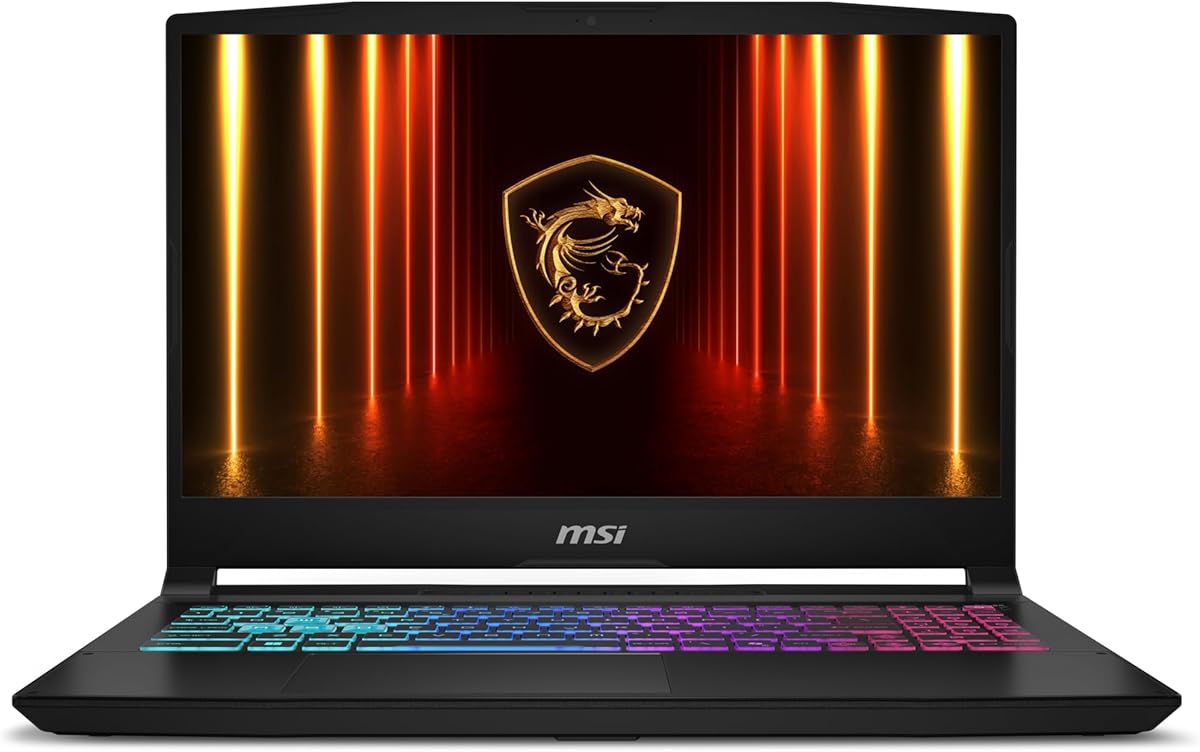




The ASUS ROG Strix G16 stands out as a top choice for flight simulation enthusiasts seeking balanced performance and display quality.
We may earn a commission when you buy through this link, at no additional cost to you.
Its Intel Core i7 processor and RTX 5060 GPU powered by Blackwell architecture deliver robust frame rates for realistic atmospheric rendering and physics calculations.
While the 16GB DDR5 RAM handles most tasks well, heavy add-on scenarios might benefit from an upgrade to ensure future-proofing for complex environments.
This laptop is ideal for pilots wanting high fidelity visuals without compromising on portability or thermal management during extended flying sessions.
ROG Intelligent Cooling with vapor chamber and liquid metal ensures stable performance under the demanding loads typical of flight simulation engines.
The 165Hz FHD+ panel with ACR film enhances contrast and reduces glare for sharper cockpit views and clearer horizon lines during flight.
We may earn a commission when you buy through this link, at no additional cost to you.
For those demanding the absolute best hardware for flight simulation the ASUS ROG Strix G16 Premium delivers unmatched power and display fidelity.
We may earn a commission when you buy through this link, at no additional cost to you.
The Core Ultra 9 processor paired with RTX 5070 Ti handles complex weather systems and dense cityscapes with ease ensuring smooth framerates.
The 240Hz Nebula display offers incredible smoothness for critical control inputs while the 32GB DDR5 RAM supports extensive mod libraries and multitasking.
This machine is perfect for professional trainers or enthusiasts who prioritize visual fidelity and processing power over portability or budget constraints.
Intel Core Ultra 9 with NPU acceleration speeds up AI-driven flight simulation features and enhances overall system responsiveness.
The 2.5K resolution at 240Hz provides incredibly sharp details for runway markings and terrain textures essential for precision flying.
We may earn a commission when you buy through this link, at no additional cost to you.
The MSI Katana 15 HX offers an impressive balance of raw power and value for flight simulators needing strong CPU performance.
We may earn a commission when you buy through this link, at no additional cost to you.
Featuring an Intel Core i9 processor and RTX 5070 GPU it manages demanding physics calculations and high-fidelity graphics without breaking the bank.
The QHD+ display delivers excellent color accuracy and sharpness which is crucial for reading instruments and spotting distant landmarks in the sky.
Ideal for serious hobbyists who want high-end specs for complex scenarios without paying premium brand prices found on other gaming laptops.
The 24-core hybrid architecture of the Core i9 ensures fast load times and smooth multitasking while running flight simulation software.
100% DCI-P3 coverage on the QHD+ screen ensures vibrant colors and detailed textures for a more realistic flying experience.
We may earn a commission when you buy through this link, at no additional cost to you.
The NIMO 17.3 laptop presents a budget-friendly option with substantial RAM for users who prioritize screen real estate over extreme graphics.
We may earn a commission when you buy through this link, at no additional cost to you.
Its 17.3 inch display offers ample space for cockpit instruments and multi-monitor setups while the 32GB DDR5 RAM supports heavy multitasking easily.
Although integrated graphics limit ultra settings it works well for lighter flight simulations or learning flights where frame rates are less critical.
This model is perfect for students or casual enthusiasts who need a large working surface and high memory capacity without a high cost.
The 17.3 inch IPS display reduces eye strain during long simulation sessions with clear visuals and wide viewing angles.
The 1TB SSD is expandable to 4TB allowing users to store vast libraries of scenery and aircraft add-ons locally.
We may earn a commission when you buy through this link, at no additional cost to you.
REALFLIGHT Evolution RC offers a dedicated simulation environment specifically designed for mastering RC aircraft and heli controls with realistic physics.
We may earn a commission when you buy through this link, at no additional cost to you.
The included Interlink DX controller allows for direct connection to a computer enabling intuitive flying that mirrors real-world RC hobby experiences.
Regular content updates bring new ultra micro and sport aircraft to the platform ensuring a diverse library for practicing different flying techniques.
This package is ideal for RC hobbyists looking to refine their skills before building or flying physical models in a safe digital environment.
The software works seamlessly with the Interlink DX controller eliminating the need for mouse inputs during complex flight maneuvers.
PhotoField technology recreates actual flying sites like Triple Tree Aerodrome providing authentic landmarks and wind patterns for practice.
We may earn a commission when you buy through this link, at no additional cost to you.
The Logitech G PRO Flight Yoke System provides an authentic piloting experience with its sturdy stainless steel shaft and programmable controls.
We may earn a commission when you buy through this link, at no additional cost to you.
Designed to build muscle memory for new pilots it offers smooth control inputs and precise adjustments for bank and pitch movements.
The included throttle quadrant and desk clamps create a robust cockpit setup that securely holds your controls in place during intense flights.
This system is best suited for home pilots wanting a professional feel and reliable hardware that integrates well with popular flight simulation software.
The stainless steel shaft ensures smooth movement without friction making small adjustments during landing approaches much easier.
Over 50 programmable controls allow you to map aircraft functions directly to the yoke for a streamlined and efficient flying interface.
We may earn a commission when you buy through this link, at no additional cost to you.
The Thrustmaster T-Flight Stick X is an excellent entry-level joystick designed for pilots who want immediate usability and reliable controls.
We may earn a commission when you buy through this link, at no additional cost to you.
Its plug and play setup eliminates driver issues allowing you to start flying instantly with adjustable resistance matching your personal flying style.
A weighted base ensures stability on your desk so you do not need to anchor the stick down during aggressive maneuvers or turbulence simulations.
This device is perfect for beginners or casual users needing an ergonomic single-hand controller that handles pitch yaw and throttle without extra hardware.
Integrated throttle and rudder twist functions eliminate the need for separate pedals saving desk space while maintaining full control.
Twelve programmable buttons and presets let you switch between different aircraft profiles quickly during multi-aircraft simulation sessions.
We may earn a commission when you buy through this link, at no additional cost to you.
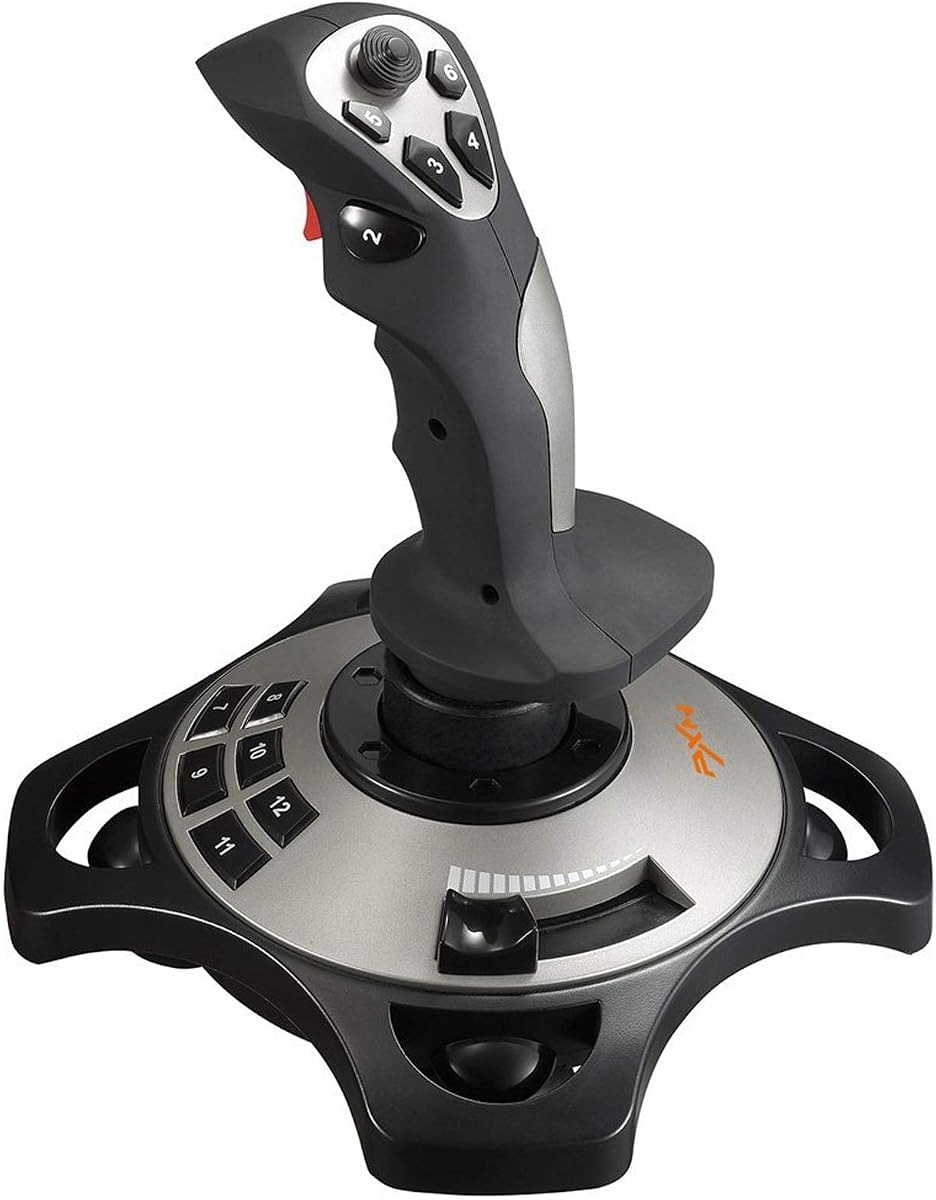
The PXN 2113PRO offers a budget-friendly solution for flight simulation with essential controls and vibration feedback for immersive sensations.
We may earn a commission when you buy through this link, at no additional cost to you.
Its ergonomic design ensures comfortable handling while the multiple axes and programmable buttons support various flight simulator scenarios and games.
Users may need to adjust driver settings to optimize vibration intensity but this step enables realistic tactile responses during turbulence or combat.
This joystick is recommended for casual gamers or learners seeking an affordable controller that provides more depth than a standard gamepad.
Vibration function adds a physical layer to the simulation helping you sense turbulence or engine changes through the stick.
Eight-way hat switch and rapid fire trigger allow for versatile control mapping across different aircraft and flight simulation games.
We may earn a commission when you buy through this link, at no additional cost to you.
The Thrustmaster TFRP Precision Rudder Pedals deliver smooth accurate control essential for realistic coordinated turns and ground handling in simulators.
We may earn a commission when you buy through this link, at no additional cost to you.
Engineered with S.M.A.R.T. rail sliding systems the pedals offer friction-free motion ensuring every movement is registered accurately by your software.
An ergonomic design provides comfort during long flight sessions while the robust construction prevents unwanted movement on the floor during intense maneuvers.
This accessory is ideal for pilots seeking precise directional control to complement yokes or joysticks and enhance the authenticity of their virtual cockpit.
The four aluminum rails allow the pedals to glide effortlessly reducing friction and resistance during rapid rudder adjustments.
The self-centering rudder axis delivers consistent returns to center for accurate yaw control during takeoff and landing phases.
We may earn a commission when you buy through this link, at no additional cost to you.
Microsoft Flight Simulator 2004 remains a classic title offering dynamic weather and realistic terrain physics that defined generations of virtual pilots.
We may earn a commission when you buy through this link, at no additional cost to you.
Its worldwide scenery with accurate 3D terrain provides a broad playground for exploration while interactive ATC adds depth to communication procedures.
Although modern simulators have surpassed its visuals this edition still delivers a focused pure flying experience appreciated by enthusiasts and veterans.
This software is recommended for collectors or those seeking a nostalgic simulation experience that emphasizes fundamentals over high-end graphical fidelity.
Dynamic weather based on physics creates three-dimensional clouds that form and dissipate naturally for authentic atmospheric conditions.
Scenery includes accurate terrain and buildings worldwide allowing pilots to fly to virtually any airport on the globe.
We may earn a commission when you buy through this link, at no additional cost to you.
Selecting the right laptop for flight simulation requires balancing processing power graphics performance and display quality for realistic experiences.
Flight simulators rely heavily on CPU power to calculate physics weather and complex environmental interactions efficiently.
Choose a high-performance Intel Core i7 or i9 or AMD Ryzen 7 or 9 processor for smooth multitasking and load times.
A dedicated GPU with ray tracing support ensures detailed clouds terrain and lighting effects are rendered smoothly without stuttering.
Look for NVIDIA RTX 5060 or higher to handle modern flight simulation software with high fidelity visual settings.
16GB of RAM is the minimum for fluid operation but 32GB or more is recommended for heavy add-on libraries and multitasking.
DDR5 memory provides faster data transfer speeds essential for loading large terrain databases quickly during flight.
A high refresh rate display such as 144Hz or 165Hz reduces motion blur making control inputs and horizon lines appear smoother.
Prioritize panels with good color accuracy to ensure instrument readings and terrain textures remain clear and distinct.
Sustained performance during long flights depends on effective cooling to prevent throttling of the CPU and GPU.
Look for laptops with advanced cooling systems like vapor chambers or liquid metal thermal compound for stability.
A fast PCIe Gen 4 SSD ensures quick load times for flight scenarios and large world maps.
1TB or more of storage is ideal to keep all your favorite aircraft and add-ons installed for instant access.
Connect your flight controllers like yokes and pedals to the USB ports and configure them within the simulator settings for proper calibration.
Keep your laptop on a hard flat surface or cooling pad during flights to maintain optimal airflow and prevent overheating.
Update graphics drivers regularly to ensure compatibility with the latest flight simulation software features and bug fixes.
While basic laptops can launch the software they will likely struggle with high fidelity settings. A laptop with a dedicated RTX graphics card is recommended for smooth performance and realistic visuals.
16GB is the minimum for decent performance but 32GB is ideal for complex environments and heavy add-on libraries. This ensures smooth transitions and loading times.
A dedicated controller like a yoke or joystick greatly enhances realism and ease of control. Using a mouse or keyboard can be cumbersome for complex flight maneuvers.
Lag can be caused by overheating or outdated drivers. Ensure your laptop has good ventilation and install the latest graphics drivers for optimal performance.
A 16-inch screen offers a good balance of portability and cockpit visibility. Larger screens help reduce eye strain during long flying sessions.
MacBooks have limited compatibility with many flight simulators that require Windows-specific drivers. Most users should choose a Windows laptop for broad software support.
The ASUS ROG Strix G16 leads our list with its balanced performance and advanced cooling making it ideal for most enthusiasts.
Consider your budget and whether you need extra RAM or a larger display before purchasing to match your specific simulation needs.
Check current deals and warranty terms to ensure you get the best value and protection for your investment in flight simulation hardware.