
Handheld Fish Finder Portable Fishing Kayak Fishfinder
4.2Editor score
Portable design with neck strap
Works in fresh and salt water
200kHz sonar frequency
Finding the right tool to locate fish without breaking the bank is essential for serious anglers and casual hobbyists alike. A cheap fishfinder offers reliable sonar technology to detect depth, structure, and fish activity, making it a vital addition to any fishing setup regardless of budget constraints.
We have carefully evaluated ten top-rated models available on the market today, focusing on performance, ease of use, and durability. Our comparison covers handheld units, kayak-specific devices, and entry-level mounted systems to ensure you find the perfect match for your specific fishing style and environment.
Each pick in this list highlights key features, pros, and cons to help you make an informed decision quickly. Please note that product specifications and availability can change over time, so always verify the latest details on the manufacturer or retailer website before finalizing your purchase.
4.2Editor score
4.5Editor score

4.7Editor score
As an Amazon Associate we earn from qualifying purchases.
The following table provides a side-by-side overview of the ten best affordable fishfinders, detailing their core specifications and capabilities to help you compare them at a glance.


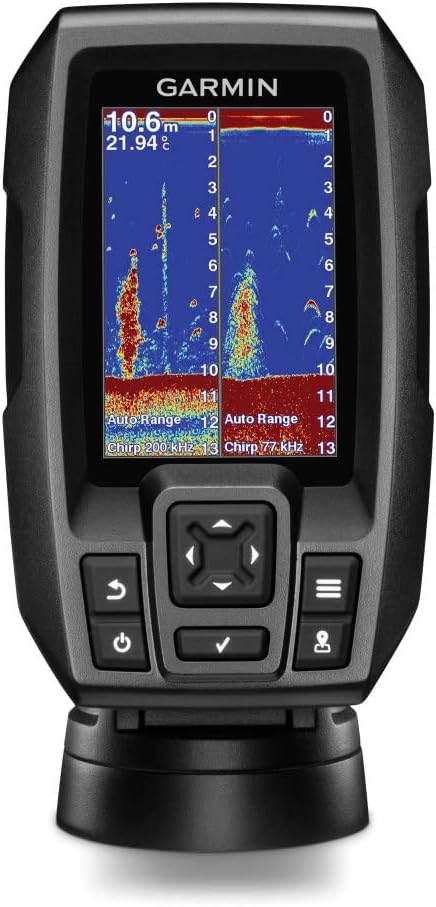
The Garmin Striker 4 stands out as a top contender in the budget-friendly segment, offering advanced sonar capabilities usually reserved for higher-priced units. With a 3.5-inch display and CHIRP Sonar technology, it delivers crisp images of fish and structure, making it a reliable tool for anglers seeking precision without overspending.
We may earn a commission when you buy through this link, at no additional cost to you.
Its Clear Vu scanning Sonar provides near-photographic images, allowing users to see detailed representations of objects and fish in the water. The device is intuitive to use with dedicated buttons and supports waypoint mapping for easy navigation. Additionally, the built-in flasher makes it versatile for ice fishing or vertical jigging.
While the screen size is compact, the IPX7 water rating ensures durability in various conditions. The trade-off is that mapping features are basic compared to premium models. However, for the price, the performance and ease of installation make it a highly recommended choice for both beginners and experienced anglers.
Anyone looking for a reliable, easy-to-use fishfinder that balances performance and affordability should consider the Striker 4. Its robust build and clear sonar imaging make it an excellent investment for those who value functionality and simplicity in their fishing gear.
This feature provides near-photographic images of underwater objects, helping you identify fish and structure with high detail.
Ideal for ice fishing, the classic flasher format allows you to view sonar data in a familiar and efficient way.
We may earn a commission when you buy through this link, at no additional cost to you.
The Lowrance Eagle Fish Finder offers a compelling option for anglers who need a clear, reliable display without the cost of advanced navigation features. Its 4-inch IPS portrait screen remains clear even in bright sunlight, ensuring you can see vital data at a glance while out on the water.
We may earn a commission when you buy through this link, at no additional cost to you.
Auto-Tuning Sonar automatically optimizes settings, reducing the need for manual adjustments and letting you focus on catching fish. The included 200 kHz Bullet Skimmer transducer provides broad coverage below the boat, making it suitable for kayaks and small craft. Fish icons help identify targets quickly without complex interpretation.
The twist-lock connector simplifies installation, which is a significant plus for portable setups. However, the lack of integrated GPS may limit navigation options for some users. Despite this, the Eagle delivers solid performance and clarity at an attractive price point, making it a strong choice for budget-conscious anglers.
If you prioritize ease of use and a clear display over advanced mapping, the Lowrance Eagle is a smart pick. It is ideal for those who want a straightforward tool to enhance their fishing experience without dealing with complicated setups or excessive costs.
This screen technology ensures high visibility from wide angles, even when wearing polarized sunglasses or in direct sunlight.
Automatically adjusts sonar settings to optimize performance, saving you time and effort while you focus on the water.
We may earn a commission when you buy through this link, at no additional cost to you.
The Handheld Fish Finder is an exceptional choice for anglers who need a portable, affordable solution for detecting fish and depth. Designed for versatility, it works on kayaks, from docks, and for ice fishing, providing essential data without requiring a permanent installation on your boat.
We may earn a commission when you buy through this link, at no additional cost to you.
Powered by four AAA batteries, it offers 4-5 hours of continuous use, which is sufficient for most fishing trips. The device displays water depth, fish location, and bottom composition like weeds or rocks. Its 200kHz sonar frequency ensures accurate readings across different water conditions.
While the display is not as advanced as larger units, the simplicity and ease of use make it accessible for beginners. You can save settings when turning it off, and the battery save mode extends runtime. The only trade-off is the lower resolution compared to more expensive models.
For those on a tight budget or needing a backup unit, this handheld finder is hard to beat. It is an ideal gift for friends or family who fish casually, offering reliable performance without the need for complex setup or high costs.
The included neck strap lets you wear the unit around your neck, keeping your hands free while fishing from a kayak or boat.
Using 200kHz sonar, it detects depth from 3ft to 328ft, providing reliable data for various fishing environments.
We may earn a commission when you buy through this link, at no additional cost to you.
The Garmin STRIKER Vivid 4cv combines premium features with an accessible design, making it a standout in the affordable category. Its 4-inch color screen uses new vivid scanning sonar palettes to help you distinguish fish and structure effortlessly, enhancing your ability to locate productive spots.
We may earn a commission when you buy through this link, at no additional cost to you.
Equipped with both CHIRP traditional sonar and CHIRP ClearVü scanning sonar, it offers versatile scanning capabilities. The high-sensitivity GPS allows you to mark waypoints and view boat speed, while the included Quickdraw Contours mapping provides instant bottom contour data without additional purchases.
Although the price is higher than basic handheld units, the value provided by the GPS and mapping features is significant. The tilt/swivel mount bracket ensures easy viewing from any angle. The only minor limitation is the relatively small screen size compared to larger chartplotters.
Anglers looking for a balance of advanced technology and ease of use will find this unit rewarding. It is perfect for those who want GPS and detailed sonar without the bulk or complexity of a full navigation system.
New color palettes on the 4-inch display make it easier to differentiate fish and underwater structures at a glance.
Included pre-loaded mapping allows you to create and view custom maps of your favorite fishing spots instantly.
We may earn a commission when you buy through this link, at no additional cost to you.
The Humminbird PiranhaMAX 4 delivers dependable performance with its Dual Beam Sonar, allowing you to choose between narrow and wide beams for detail or coverage. This flexibility helps you identify fish, structure, and bottom contours effectively, making it a versatile tool for various fishing scenarios.
We may earn a commission when you buy through this link, at no additional cost to you.
It includes a tilt and swivel mount that lets you quickly adjust the viewing angle, ensuring comfortable operation even in rough waters. The unit comes with an XNT 9 28 T transom-mount transducer, simplifying installation on boats without requiring additional purchases.
While it lacks GPS features and modern digital mapping, its straightforward functionality is ideal for those who prefer simplicity. The 1-year limited warranty adds peace of mind. The only drawback is the older screen tech, which may lack the clarity of newer models.
For anglers who value reliability and ease of use over advanced navigation, the PiranhaMAX 4 is a strong contender. It is well-suited for traditional fishing methods where focusing on the sonar return is more important than chartplotting.
Switch between narrow and wide beams to balance detail and coverage based on your current fishing conditions.
Allows for quick adjustment of the viewing angle, ensuring you can see the screen clearly from any position.
We may earn a commission when you buy through this link, at no additional cost to you.
The LUCKY FFC1108 is designed specifically for portable fishing, making it perfect for kayaks, shore fishing, or ice fishing. It displays fish location, water depth, and bottom features like weeds and rocks. The fish alarm alerts you when schools are nearby, which is especially useful for active anglers.
We may earn a commission when you buy through this link, at no additional cost to you.
With a depth range of 3ft to 328ft, it covers most common fishing environments. The backlight ensures visibility in sunlight or darkness. You can switch between feet and meters, and there are five sensitivity levels to adapt to clear or turbid water conditions.
It is powered by batteries that last around 4-5 hours, with a battery save mode to extend usage. While it does not offer advanced sonar scanning, its simplicity and portability are major strengths. The only limitation is the lack of a rechargeable option for longer trips.
If you need a lightweight, user-friendly tool for casual or kayak fishing, this device is an excellent choice. It makes a great gift for family members who enjoy fishing and want a no-fuss way to find fish.
Alerts you automatically when fish or fish schools pass by the sensor area, helping you react quickly to bites.
Five sensitivity levels allow you to fine-tune the detection for clear or turbid water conditions as needed.
We may earn a commission when you buy through this link, at no additional cost to you.
The Humminbird Helix 5 provides advanced sonar and mapping features at a competitive price. Its Dual Spectrum CHIRP Sonar delivers clear views of fish arches and structure in both wide and narrow modes, giving you the flexibility to scan broadly or focus on details.
We may earn a commission when you buy through this link, at no additional cost to you.
With Enhanced GPS Navigation, you get coverage of over 10,000 lakes and coastlines via the included Basemap. The AutoChart Live feature allows you to create real-time maps of depth contours and vegetation while on the water. This is ideal for exploring new fishing grounds.
The user-friendly keypad control makes operating the device intuitive even in rough weather. However, the higher price point may be a consideration for strict budget shoppers. Despite this, the value of the included mapping and sonar quality justifies the cost for serious anglers.
If you need a powerful tool for navigation and detailed sonar imaging, the Helix 5 is a top choice. It is designed for anglers who want to maximize their catch through precise mapping and high-quality sonar data.
Offers two ways to search: Wide Mode for maximum coverage and Narrow Mode for detailed scanning of fish-holding structure.
Creates real-time maps of depth contours and bottom features while boating, helping you discover new spots instantly.
We may earn a commission when you buy through this link, at no additional cost to you.
This Portable Rechargeable Fish Finder stands out for its wireless design, eliminating the need to drill holes in your boat hull. The sonar sensor can be cast up to 262 feet away, allowing you to explore hard-to-reach spots easily. It is perfect for shore fishing or small kayaks.
We may earn a commission when you buy through this link, at no additional cost to you.
The color LCD display is visible in both sunlight and darkness, and you can switch between black and white backgrounds for better contrast. It measures depth, temperature, and fish size, providing comprehensive data for your fishing session. The sensor is rechargeable, which is cost-effective long term.
You can tether the sensor with your fishing line and cast it as far as needed. However, the sensor indicator may not show battery status until it floats in water. Despite minor quirks, the convenience and portability make it a valuable tool for anglers.
If you want a versatile, no-drill solution for various fishing environments, this unit is ideal. It is suitable for lakes, rivers, seas, and ice fishing, offering a modern approach to portable sonar technology.
Allows you to cast the sensor up to 262 feet away without drilling holes in your boat, making it highly versatile.
Provides clear visibility in sunlight and darkness with selectable backgrounds to reduce eye strain.
We may earn a commission when you buy through this link, at no additional cost to you.
The DANOPLUS Portable Fish Finder features a large 2.4-inch colorful LCD screen, making it easy to read fish data. It supports 147 feet of depth detection and a 90-degree sonar angle, ensuring coverage for most freshwater and saltwater conditions.
We may earn a commission when you buy through this link, at no additional cost to you.
Its attractive lamp sensor automatically turns on when touching water, helping to attract fish and making fishing easier. The fish alarm shows size and depth when fish pass by the sensor area. With 21 operating languages, it is accessible to anglers worldwide.
The rechargeable sensor is convenient for extended trips without carrying extra batteries. However, the depth limit may not suit deep sea fishing. The device also includes a fish alarm function to alert you when targets are within range.
If you need a portable fishfinder with a clear display and helpful alerts for kayak or shore fishing, this is a solid option. It combines modern design with practical features to improve your on-water experience.
The 2.4-inch colorful screen offers clear visibility, making it easy to read depth and fish data in any lighting.
Automatically turns on when touching water to attract fish, potentially increasing your chances of a successful catch.
We may earn a commission when you buy through this link, at no additional cost to you.
This wireless sonar sensor fishfinder uses dual frequencies to fine-tune readings, offering flexibility for different water conditions. It includes a color LED display that is easy to read in sunlight or at night, with a choice of black or white backgrounds for better visibility.
We may earn a commission when you buy through this link, at no additional cost to you.
Both the receiver and sensor are rechargeable, working for about six hours on a charge. It displays depth, temperature, fish size, and bottom contour. You can mount the sensor on your boat or float it in accessible areas, making it suitable for trolling or stationary fishing.
Note that the fish icon will not display if the sensor is in shallow water less than 1 meter. This limitation requires careful placement for accurate readings. Despite this, the dual frequency and rechargeable design offer good value for casual anglers.
If you need a versatile, rechargeable unit that supports various fishing methods, this model is worth considering. It is a great partner for lake kayak boat fishing and ice fishing alike.
Uses 125 kHz and 433 kHz frequencies to help you fine-tune readings without complexity for better accuracy.
The receiver and sensor are both rechargeable and provide about six hours of continuous use per charge.
We may earn a commission when you buy through this link, at no additional cost to you.
Choosing the right fishfinder involves considering several factors such as sonar technology, portability, display quality, and power source to match your specific fishing needs.
Sonar technology is the core of any fishfinder. Basic models use standard 200kHz sonar to detect fish and depth. Advanced units offer CHIRP or scanning sonar for clearer images and better target separation. For budget buyers, a reliable 200kHz transducer is often sufficient for general freshwater use.
Prioritize models with CHIRP if you need detailed structure images. Otherwise, standard sonar works well for simple depth and fish location needs.
The display size and resolution affect how easily you can read data. Larger screens are easier to view but may cost more. Look for LCD or IPS screens that are visible in bright sunlight. Many cheap models offer smaller displays, which are acceptable if the backlight is strong.
Choose a display size that fits your vessel and viewing preferences. A 3.5 to 4-inch screen is common in budget units and provides good readability.
If you fish from kayaks, shore, or ice, portability is crucial. Handheld units or those with castable sensors eliminate the need for permanent installation. Some models come with neck straps for convenience. This flexibility ensures you can take your fishfinder wherever you go.
Opt for handheld or wireless castable units if you do not want to install a fixed transducer. They are lighter and easier to transport between boats.
Fishing gear is often exposed to splashes or rain. A good waterproof rating like IPX7 ensures the device can withstand water exposure without damage. This feature is essential for longevity, especially when using a fishfinder on open water or in wet conditions.
Always check the waterproof rating before purchase. Devices with IPX7 or higher are recommended for all types of fishing environments.
Battery life determines how long you can fish without interruption. Some models use standard batteries, while others are rechargeable. For long trips, rechargeable units reduce costs and environmental impact. Check the expected runtime and battery save modes.
Select a power source that aligns with your trip duration. Rechargeable options are convenient, but battery-powered ones are easy to replace on the fly.
Basic fishfinders focus on sonar data, but some include GPS and mapping features. These help you mark waypoints, track routes, and understand underwater contours. While they add cost, they can significantly improve navigation and productivity on the water.
Decide if GPS is necessary for your fishing style. If you fish familiar waters, a basic unit suffices. If you explore new areas, look for models with mapping capabilities.
An intuitive interface is important for beginners and experienced anglers alike. Look for dedicated buttons, clear menus, and auto-tuning features that simplify setup. The more straightforward the controls, the less time you spend adjusting settings and more time you spend fishing.
Prioritize models with simple setups and auto-adjusting features. This ensures you can start fishing quickly without technical hurdles.
Fishfinders are subjected to harsh conditions, so durability is key. Check the build materials and water resistance. A warranty can provide peace of mind against defects. Many budget-friendly models come with 1 to 2-year warranties, which are valuable for protecting your investment.
Choose a unit with a solid warranty and robust build. This minimizes risks and ensures support if issues arise during the lifespan of the device.
Proper installation is critical for performance. For mounted units, ensure the transducer is placed on the hull with no air bubbles. For handheld models, submerge the sensor completely in water. Adjust the sensitivity to avoid noise and ensure clear readings.
Regularly clean the transducer to remove dirt or marine growth that can block signals. Rinse it with fresh water after use, especially in saltwater environments. Store the unit in a dry place when not in use to prevent corrosion or moisture damage.
Update software or firmware if the manufacturer offers it. Check the user manual for specific calibration tips. Maintaining the device ensures accurate data and extends its lifespan. Always test the unit on calm water before heading to deeper spots.
Yes, many affordable models use standard 200kHz sonar which provides accurate depth and fish location data. While they may lack advanced imaging, they are reliable for finding fish and bottom contours in most freshwater and saltwater environments.
Most cheap fishfinders are designed to work in both freshwater and saltwater. Ensure the transducer and display unit have a waterproof rating like IPX7 to prevent damage from salt and moisture. Regular rinsing is recommended after use in saltwater.
CHIRP sonar sends a continuous sweep of frequencies to provide clearer images with better target separation. Standard sonar sends single frequencies. CHIRP is generally superior for identifying fish and structure but is found in more expensive models.
Battery life varies by model. Standard AAA battery units typically last 4-5 hours. Rechargeable models often offer around 6 hours. Check the specs and consider battery save mode to extend runtime during long fishing trips.
Absolutely. Handheld units are ideal for kayaks as they are portable and do not require permanent installation. You can attach the sensor to the hull or cast it freely. Many handheld models come with neck straps for easy access.
Some budget models include basic GPS for waypoints, but many handheld units do not. GPS functionality is more common in mounted systems. Check the product details to confirm if GPS is included in the specific model you are considering.
For transom-mount units, secure the transducer to the stern with the blade facing down. Ensure no bubbles are trapped. For handheld units, submerge the sensor in the water. Follow the manufacturer's manual for specific mounting and calibration instructions.
We have explored ten excellent cheap fishfinder options that offer reliability without compromising on essential features. From the Garmin Striker 4 to the portable handheld units, each model brings unique strengths to the table for budget-conscious anglers.
When making your decision, prioritize the features that matter most to you, such as portability, sonar clarity, or GPS capability. A well-chosen unit can transform your fishing experience by helping you locate fish more efficiently and confidently.
Prices and availability are subject to change, so be sure to check the latest details before buying. With the right fishfinder in hand, you are ready to tackle the water and make every fishing trip count.