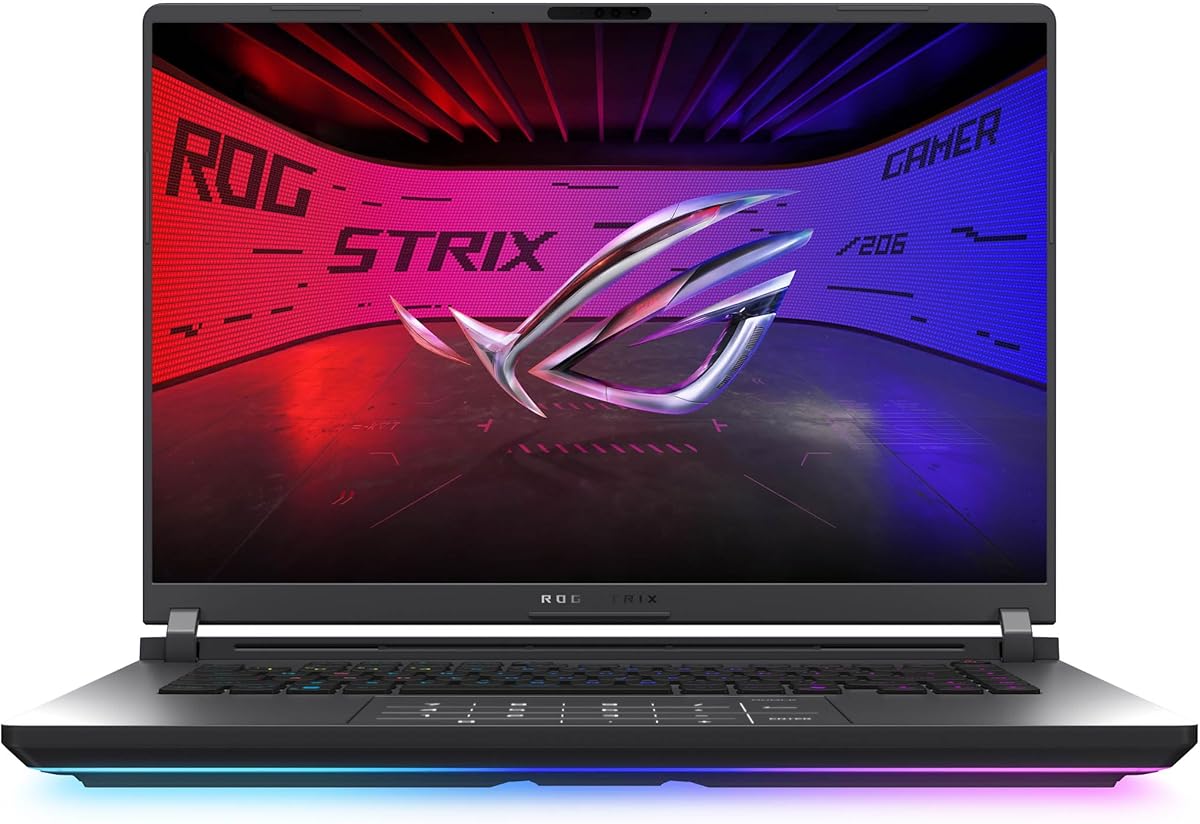
ASUS ROG Strix G16 Ultra
4.3Editor score
RTX 5070 Ti GPU
240Hz ROG Nebula Display
Ultra 9 Processor
Finding the right laptop for flight simulators requires balancing raw processing power with display fidelity to ensure smooth and immersive virtual aviation experiences without lag or visual artifacts.
We evaluated ten top models focusing on graphics capabilities, processor speed, memory capacity, and thermal management to determine which systems handle demanding simulations like Microsoft Flight Simulator effectively.
Each pick highlights specific strengths and trade-offs to guide your decision, though note that prices fluctuate frequently so verify current offers before purchasing your next high performance computing device.
4.3Editor score

4.4Editor score

4.2Editor score
As an Amazon Associate we earn from qualifying purchases.
The following table provides a quick side by side overview of the core specifications for each model to help you compare processing power graphics performance and display features at a glance.




The ASUS ROG Strix G16 stands out as the top recommendation for flight simulation enthusiasts seeking a balance of power and thermal efficiency in a portable form factor.
We may earn a commission when you buy through this link, at no additional cost to you.
Powered by the Intel Core i7 14650HX and NVIDIA RTX 5060, this machine delivers smooth frame rates in demanding simulators while maintaining system stability through ROG Intelligent Cooling.
While the 16GB of DDR5 memory is ample for most users, power users running multiple background apps might consider an upgrade, and the battery life remains typical for high performance laptops.
This laptop is ideal for pilots and hobbyists who need reliable hardware for training and recreation without compromising on visual fidelity or response time.
The vapor chamber and tri-fan technology ensure consistent performance during long flight sessions without thermal throttling.
The 165Hz FHD+ screen with ACR film reduces glare for clearer cockpit views in bright lighting conditions.
We may earn a commission when you buy through this link, at no additional cost to you.
For those seeking the absolute best performance available in a laptop form factor the ASUS ROG Strix G16 Ultra offers cutting edge specifications tailored for extreme simulation tasks.
We may earn a commission when you buy through this link, at no additional cost to you.
The Intel Core Ultra 9 and RTX 5070 Ti combo handles complex rendering and physics calculations with ease while the 32GB of RAM ensures smooth multitasking.
The premium price tag reflects the high end components but for serious sim racers or professionals who need every ounce of power it is a worthy investment.
Buyers should be prepared for a heavier charger and shorter battery life given the aggressive performance profile of this flagship device.
The RTX 5070 Ti with DLSS 4 support delivers incredibly detailed skies and terrain in flight simulators.
The ROG Nebula display provides vibrant colors and fast refresh rates for fluid cockpit instrument visualization.
We may earn a commission when you buy through this link, at no additional cost to you.
The NIMO 17.3 Gaming Laptop presents an impressive value proposition for users on a budget who still require substantial memory and storage for flight simulation.
We may earn a commission when you buy through this link, at no additional cost to you.
While the integrated Radeon graphics may not support ultra settings in modern simulators the 32GB of RAM and large screen provide a decent entry level experience.
The trade off here is graphical fidelity since the system is better suited for older or less demanding flight simulation software rather than latest releases.
This model is perfect for students or casual users who want a large workspace and decent speed without breaking the bank.
The 17.3 inch display offers ample screen real estate for viewing multiple instrument panels simultaneously.
With 32GB of DDR5 RAM this laptop handles multitasking well even with integrated graphics.
We may earn a commission when you buy through this link, at no additional cost to you.
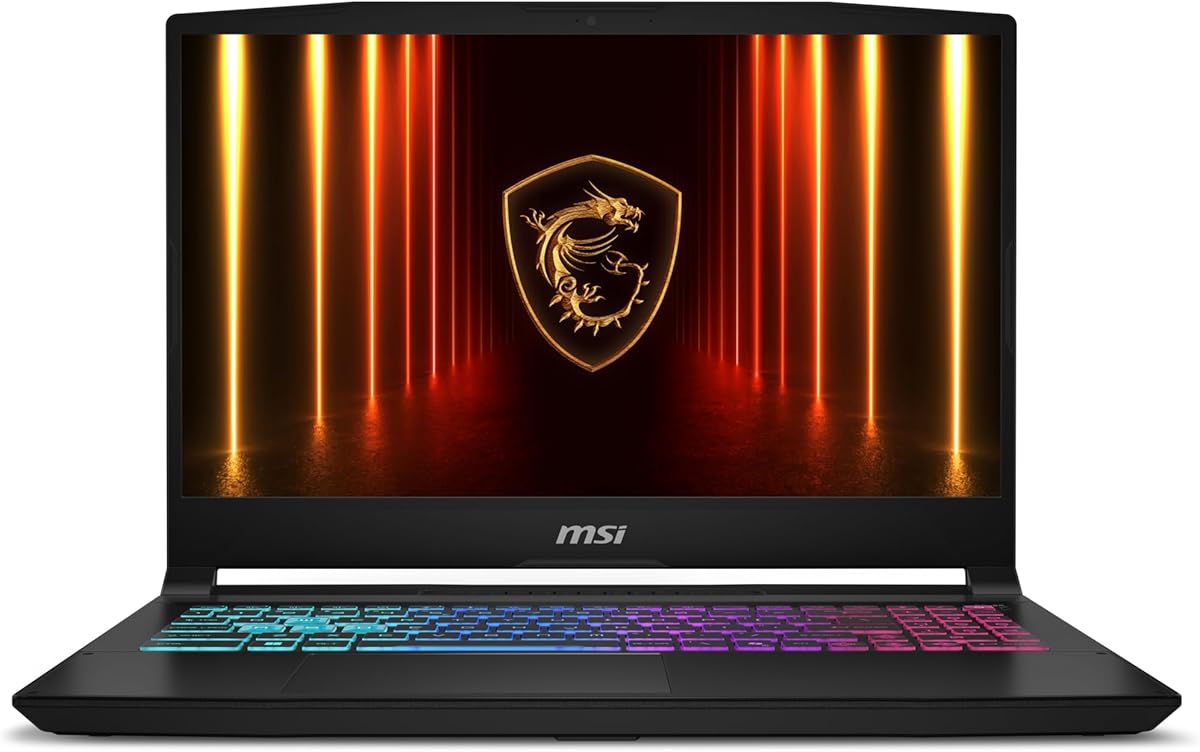
The msi Katana 15 HX brings workstation level performance to a gaming chassis with an Intel Core i9 processor that excels at simulation physics.
We may earn a commission when you buy through this link, at no additional cost to you.
The RTX 5070 GPU ensures that even demanding titles run smoothly while the QHD+ display offers sharper details than standard FHD screens.
However the aggressive cooling solution can generate noticeable noise during high load which may be distracting in quiet simulation environments.
This device is best suited for users who prioritize raw performance and can tolerate a bit of noise for the sake of speed.
The 24 core hybrid architecture handles complex flight dynamics and background tasks with ease.
The QHD+ screen reveals more detail in terrain and clouds for realistic visual feedback.
We may earn a commission when you buy through this link, at no additional cost to you.
REALFLIGHT Evolution is a specialized simulator designed for RC aircraft enthusiasts but its realistic physics engine can also assist with basic flight principles.
We may earn a commission when you buy through this link, at no additional cost to you.
The included Interlink DX controller provides immediate tactile feedback which is crucial for developing muscle memory in aviation contexts.
While not a full scale flight simulator it offers a unique niche for hobbyists transitioning between model aircraft and full scale aviation training.
This package is an excellent starting point for those interested in aerodynamics without needing a full cockpit setup immediately.
The bundled Interlink DX controller offers precise inputs that match real aviation control layouts.
Support for VR headsets allows for an immersive view of the virtual sky and horizon.
We may earn a commission when you buy through this link, at no additional cost to you.
The Logitech G PRO Flight Yoke System transforms any desk into a professional aviation cockpit with its realistic yoke controls and integrated throttle quadrant.
We may earn a commission when you buy through this link, at no additional cost to you.
Built with a stainless steel shaft it provides the smooth and robust feel expected from commercial aviation hardware.
The extensive number of programmable buttons allows users to map complex functions ensuring that critical controls remain within easy reach.
Pilots looking for a serious training tool will appreciate the fidelity this system offers compared to basic game controllers.
The stainless steel components ensure a premium feel that mimics real aircraft controls perfectly.
With over 50 controls available customization is extensive for various aircraft types and simulators.
We may earn a commission when you buy through this link, at no additional cost to you.
The Thrustmaster T Flight Stick X is a versatile joystick designed for users who want a complete control solution without complex installation.
We may earn a commission when you buy through this link, at no additional cost to you.
Its adjustable resistance and weighted base provide a stable platform that prevents unwanted movement during aggressive maneuvers.
While the construction is lightweight it remains durable enough for regular use in home simulation setups.
This stick is ideal for beginners or casual flyers who need reliability and ease of use over premium materials.
Plug and play connectivity means you can start flying in seconds without driver installations.
The ergonomic design reduces hand fatigue during long simulation sessions.
We may earn a commission when you buy through this link, at no additional cost to you.
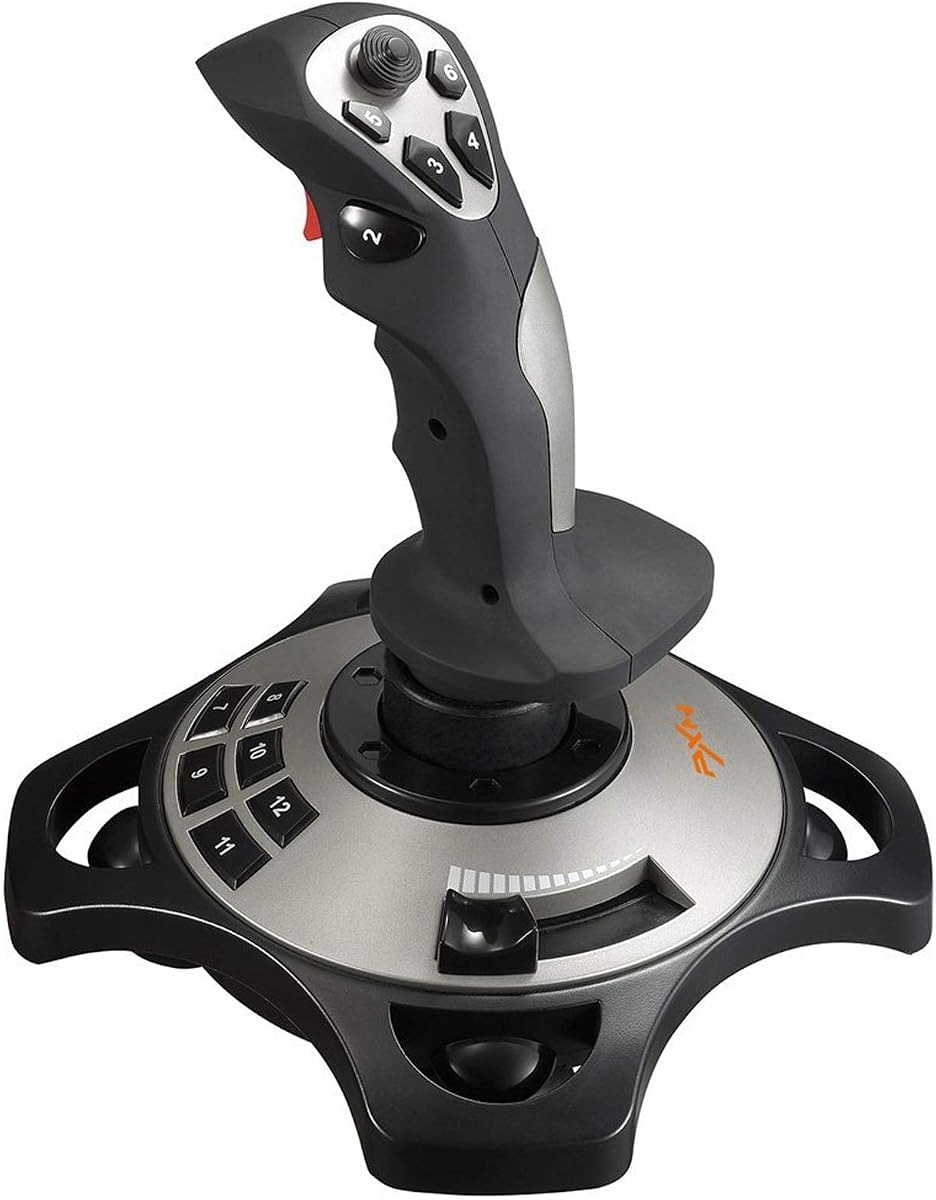
The PXN 2113PRO offers an affordable entry point into flight simulation with basic joystick functionality and vibration feedback.
We may earn a commission when you buy through this link, at no additional cost to you.
It supports a wide range of PC flight simulators making it a versatile choice for casual gamers exploring aviation titles.
While it lacks the refinement of higher end models it fulfills the basic requirement for physical input over keyboard mouse.
Users looking for a simple and cheap controller will find this device meets their needs for occasional simulation use.
The vibration function adds a tactile element to flight events like turbulence or landing impacts.
Works with many popular flight titles including Microsoft Flight Simulator and X Plane.
We may earn a commission when you buy through this link, at no additional cost to you.
The Thrustmaster TFRP Precision Flight Sim Rudder Pedals provide the essential third axis of control needed for realistic aviation simulation.
We may earn a commission when you buy through this link, at no additional cost to you.
The S.M.A.R.T. rail system ensures smooth and friction free movement which is critical for precise rudder inputs during takeoff and landing.
Compatibility with multiple platforms including consoles makes this a versatile choice for diverse gaming setups.
Pilots who want to improve their coordination and landing accuracy will benefit greatly from adding these pedals to their setup.
The sliding rail design allows for consistent and smooth rudder adjustments.
Works seamlessly with PC Xbox and PlayStation simulators for broad utility.
We may earn a commission when you buy through this link, at no additional cost to you.
Microsoft Flight Simulator 2004 remains a beloved classic that introduced realistic weather and world scenery to many aviation enthusiasts.
We may earn a commission when you buy through this link, at no additional cost to you.
Its dynamic weather system and worldwide terrain provide a solid foundation for learning flight mechanics even with older graphics.
While modern simulators offer better visuals this version offers a lightweight experience that runs well on less powerful hardware.
It is a great option for those who prefer simplicity and nostalgia over cutting edge graphical fidelity.
The three dimensional cloud system and weather physics are still impressive for the era.
Supports multiple monitors which allows for a wider cockpit view setup.
We may earn a commission when you buy through this link, at no additional cost to you.
Selecting the right laptop for flight simulators involves evaluating several key technical components to ensure smooth and immersive virtual aviation training.
Flight simulators rely heavily on the GPU to render detailed terrain skies and aircraft models. A dedicated NVIDIA RTX GPU is essential for handling high resolution textures and complex physics without stuttering.
Prioritize laptops with dedicated graphics cards over integrated solutions to ensure consistent frame rates during demanding flights.
The CPU manages flight physics and background processes. Modern flight simulators are optimized for multi core processors so look for models with H series or Ultra processors.
A higher core count allows for better multitasking when running communication software alongside the simulator.
Flight simulators load large amounts of scenery data into RAM. Having 32GB ensures that your system does not slow down when multiple windows are open.
16GB is a minimum but 32GB provides future proofing for increasingly complex simulation software.
A high refresh rate screen helps with smooth panning and instrument reading. Color accuracy ensures that weather effects and terrain look realistic.
Look for at least 144Hz refresh rates and wide color gamut coverage for the best visual experience.
Simulators often run for hours requiring sustained performance. Advanced cooling systems prevent throttling that causes frame rate drops.
Laptops with vapor chambers or multiple fans will maintain stability during long training sessions.
USB ports are needed for flight yokes joysticks and pedals. Wi-Fi speed matters for online multiplayer and updates.
Ensure the laptop has enough USB ports to connect all your peripherals without needing too many hubs.
Fast NVMe SSDs reduce load times for maps and scenarios. A minimum of 1TB is recommended due to the size of simulation files.
Upgradability is also a factor if you plan to store multiple simulation packages.
Consider the weight if you travel to fly with your setup. High performance laptops tend to be heavier but some models balance power and size well.
Battery life is secondary to power but useful for brief testing sessions away from an outlet.
Always plug your laptop into a power source during long simulation sessions to prevent performance throttling due to battery saving modes.
Keep the intake vents clear of dust and debris to maintain optimal cooling efficiency over the lifespan of the device.
Regularly update your graphics drivers to ensure compatibility with the latest simulation patches and feature additions.
For a playable experience you need at least a dedicated RTX 3050 class GPU a modern quad core CPU and 16GB of RAM. However 32GB is highly recommended for smooth operation.
While not strictly required gaming laptops often have better cooling and GPU options suited for the high loads of simulation software compared to standard ultrabooks.
Older or simpler simulators can run on integrated graphics but modern titles like MSFS require a dedicated GPU for acceptable performance and visual detail.
A higher refresh rate makes panning and instrument tracking smoother which reduces eye strain during long sessions. A 144Hz screen is a good starting point.
Yes flight simulators load terrain data into RAM. Having more RAM prevents stuttering when streaming distant scenery or running background apps.
The GPU is generally more critical for rendering visuals but a strong CPU is needed for physics calculations. A balanced approach with both being recent is best.
Mac laptops are less ideal because many flight simulators are optimized for Windows. If you must use a Mac consider using Boot Camp or virtualization software.
Modern simulators require large amounts of storage for scenery and aircraft. Plan for at least 1TB of free space to install multiple large packages.
The ASUS ROG Strix G16 offers the best balance for most users while the Ultra version provides top tier performance for professionals.
Prioritize a dedicated GPU and sufficient RAM to ensure your virtual flights remain smooth and visually rich during critical maneuvers.
Always verify the latest pricing and deals before buying as technology markets change rapidly and discounts can shift significantly.